 celebyachts.com
The maritime broadsheet of public waters · Register current through 27 Jul 2026
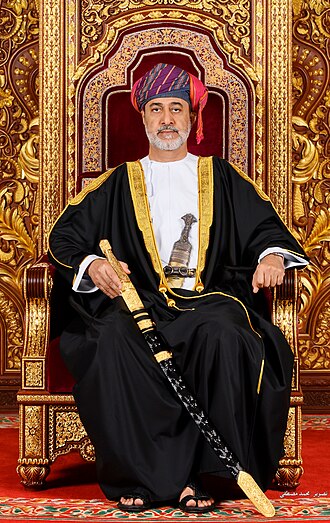
Sultan of Oman from 1970 to 2020
Qaboos bin Said Al Said was Sultan of Oman from 23 July 1970 until his death in 2020. A fifteenth-generation descendant of the founder of the Al Bu Said dynasty, he was the longest-serving leader in the Middle East and Arab world at the time of his death, having ruled for almost half a century.
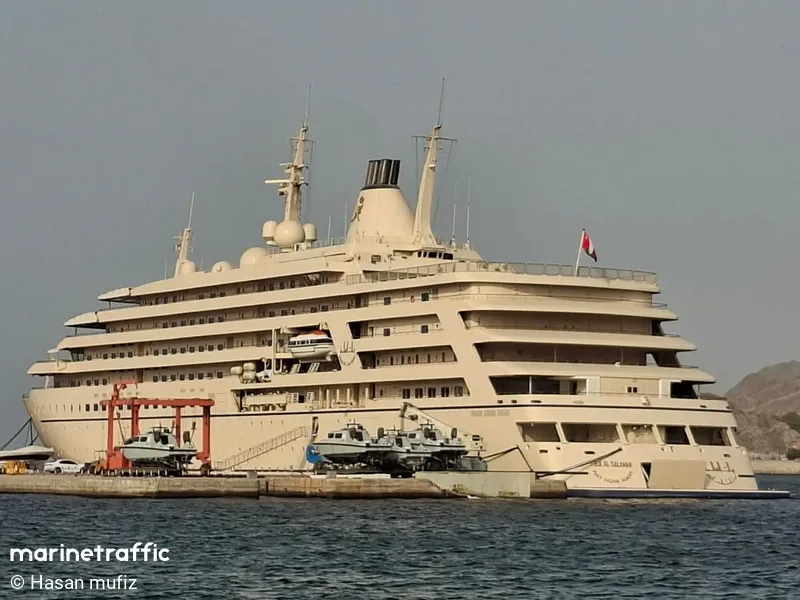 Mariotti (Genoa)
164 m · 538 ft · 2016 · Oman
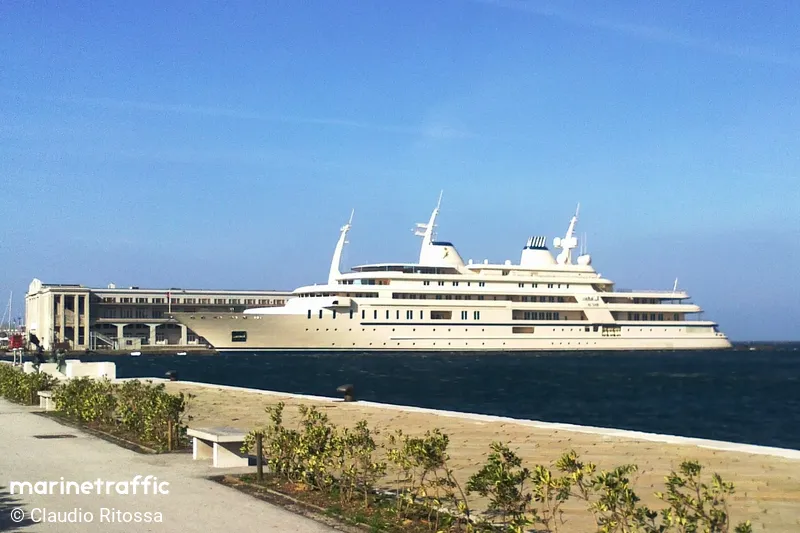 Lürssen
155 m · 509 ft · 2008 · Oman
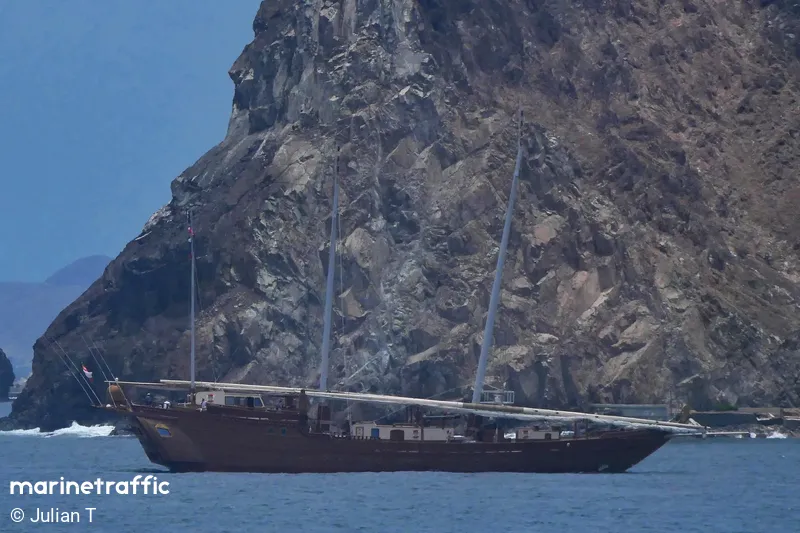 Oman Royal Yacht Squadron
52.6 m · 173 ft · 1988 · Oman
Qaboos bin Said was born in the southern city of Salalah in Dhofar on 18 November 1940 as the only son of Sultan Said bin Taimur Al Said and Mazoon bint Ahmad Al Mashani. He received his primary and secondary education in India, and was sent to a private educational establishment at Bury St Edmunds in England at age 16. At 20, he entered the Royal Military Academy Sandhurst. After graduating from Sandhurst in September 1962, he joined the British Army and was posted to the 1st Battalion The Cameronians (Scottish Rifles), serving with them in Germany for one year. He also held a staff appointment with the British Army. After his military service, Qaboos studied local government subjects in England and then completed his education with a world tour chaperoned by Leslie Chauncy. Upon his return in 1966, he was placed under virtual house arrest in Al Hosn Palace in Salalah by his father. Here he was kept isolated from government affairs, except for occasional briefings by his father's personal advisers. Qaboos studied Islam and the history of his country. His personal relationships were limited to a handpicked group of palace officials who were sons of his father's advisors and a few expatriate friends such as Tim Landon. Sultan Said said that he would not allow his son to be involved with the developing planning process, and Qaboos began to make known his desire for change—which was quietly supported by his expatriate visitors.
Qaboos financed the construction or maintenance of a number of mosques, notably the Sultan Qaboos Grand Mosque, as well as the holy places of other religions. Through a donation to UNESCO in the early 1990s, Qaboos funded the Sultan Qaboos Prize for Environmental Preservation, to afford recognition to outstanding contributions in the management or preservation of the environment. The prize has been awarded biannually since 1991.
Qaboos was a Muslim of the Ibadi denomination, which has traditionally ruled Oman. Although Oman is predominantly Muslim, the Sultan granted freedom of religion in the country and financed the construction of four Catholic and Protestant churches in the country as well as several Hindu temples. The Sultan was an avid fan and promoter of classical music. His 120-member orchestra consists entirely of young Omanis who, since 1986, audition as children and grow up as members of the symphonic ensemble. They play locally and traveled abroad with the Sultan. Argentine composer Lalo Schifrin was commissioned to compose a work entitled Symphonic Impressions of Oman. Qaboos was particularly enthusiastic about the pipe organ. The Royal Opera House Muscat features the second largest mobile pipe organ in the world, which has three specially made organ stops, named the "Royal Solo" in his honour. He was also a patron of local folk musician Salim Rashid Suri, whom he made a cultural consultant. On 22 March 1976, Qaboos married his first cousin Sayyida Nawwal bint Tariq Al Said (born 1951), the daughter of his uncle Sayyid Tariq bin Taimur and Sayyida Shawana bint Nasir Al Busaidiyah. Nawwal was renamed Kamila at the time of her marriage and is the half-sister of Qaboos's successor, Haitham bin Tariq. The marriage ended in divorce in 1979 and produced no children. In September 1995, Qaboos was involved in a car accident in Salalah just outside his palace, which killed one of his most prominent and influential ministers, the deputy prime minister for finance and economy, Qais Bin Abdul Munim Al Zawawi. Qaboos owned several yachts administered by the Oman Royal Yacht Squadron, including Al Said and Fulk Al Salamah, two of the world's largest yachts. Qaboos was widely believed by Omanis and Gulf Arabs to be homosexual. Qaboos's obituary in The Times described rumours throughout his life of "liaisons with elegant young European men". Queer News wrote that Qaboos "lived almost as an openly gay man".
Qaboos had suffered from colon cancer since 2014, for which he received treatment. On 14 December 2019, he was reported to be terminally ill from the disease after being admitted to the UZ Leuven hospital in Belgium, and opted to return home because he wanted to die in his own country. He died on 10 January 2020 at the age of 79. Following his death, the royal court declared three days of national mourning and halted all public and private official business for the same period, announcing the national flag would be flown at half-mast for a period of 40 days. Kuwait, Saudi Arabia, Qatar, the United Arab Emirates, Bahrain, Jordan, Lebanon, and Egypt all declared three days of mourning; India and Bangladesh declared one day of mourning. The United Kingdom lowered flags to half-mast as a sign of respect, and Prime Minister Boris Johnson described Qaboos as a "father of the nation", and "an exceptionally wise and respected leader" who "sought to improve the lives of the Omani
Biographical detail compiled from Wikipedia and Wikidata, which are edited openly and may be incomplete or out of date. Fleet data is our own. Source →