 celebyachts.com
The maritime broadsheet of public waters · Register current through 27 Jul 2026
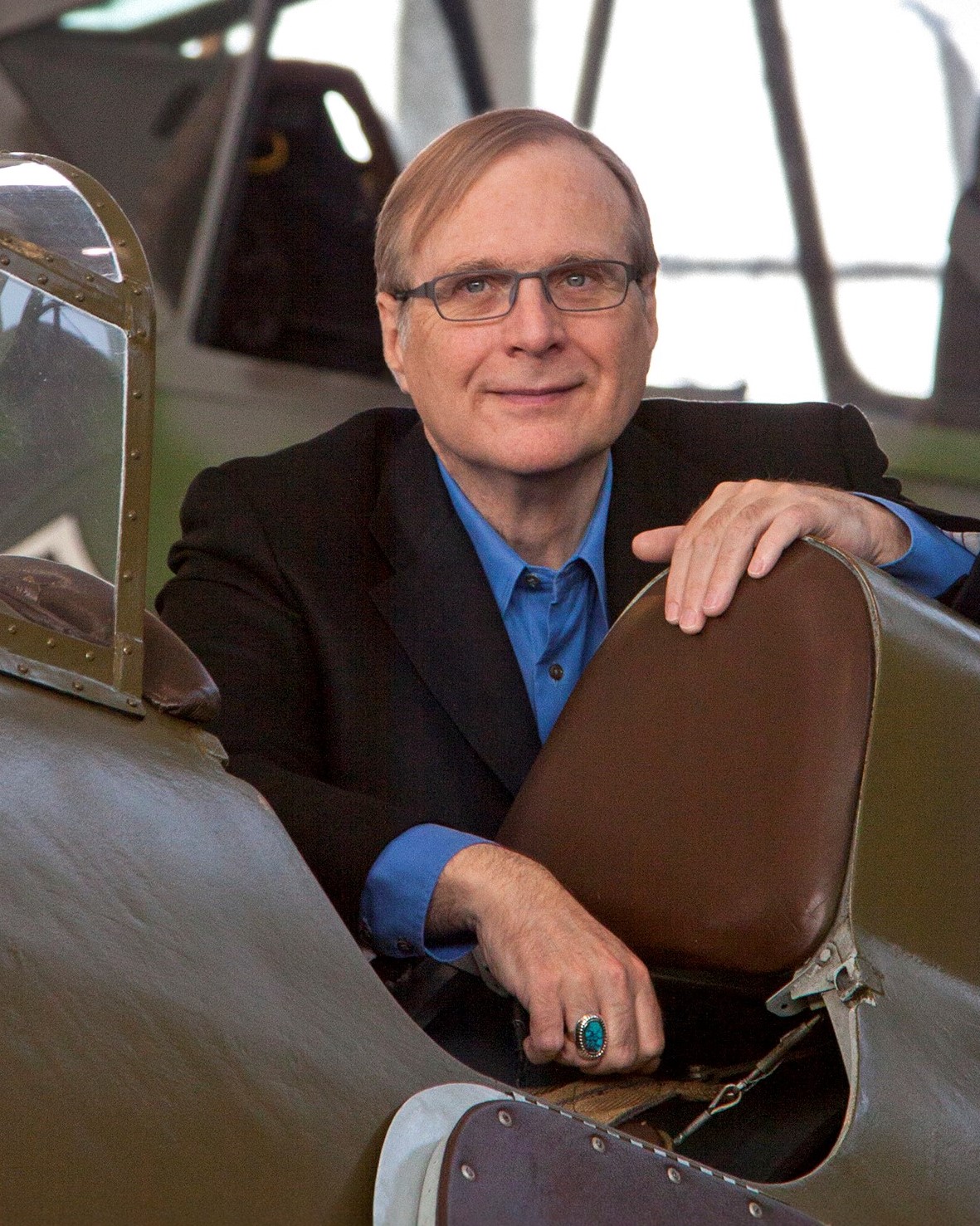
American businessman (1953–2018)
Paul Gardner Allen was an American businessman, computer programmer, and investor. He co-founded Microsoft Corporation with his childhood friend Bill Gates in 1975, which was followed by the microcomputer revolution of the 1970s and 1980s. Allen was ranked as one of the richest people in American history by Forbes, with an estimated net worth of $20.3 billion at the time of his death in October 2018.
Allen was born on January 21, 1953, in Seattle, Washington, to Kenneth Sam Allen (a librarian) and Edna Faye (née Gardner) Allen (a fourth-grade teacher). From 1965 to 1971 he attended Lakeside School, a private school in Seattle where he befriended Bill Gates, with whom he shared an enthusiasm for computers. They used Lakeside's Teletype terminals to develop their programming skills on several time-sharing computer systems. They also used the laboratory of the Computer Science Department of the University of Washington for personal research and computer programming until they were banned in 1971 for abusing their privileges. Gates and Allen joined with Ric Weiland and Gates' childhood best friend and first collaborator, Kent Evans, to form the Lakeside Programming Club and find bugs in Computer Center Corporation's software, in exchange for extra computer time. In 1972, after Evans' sudden death in a mountain climbing accident, Gates turned to Allen for help finishing an automated class scheduling system for Lakeside. They then formed Traf-O-Data to make traffic counters based on the Intel 8008 processor. According to Allen, he and Gates would go dumpster diving during their teenage years for computer program code. Allen achieved a perfect SAT score of 1600 and went to Washington State University, where he joined the Phi Kappa Theta fraternity. He dropped out of college after two years to work as a programmer for Honeywell in Boston near Harvard University where Gates was enrolled. Allen convinced Gates to drop out of Harvard in order to focus on Microsoft.
In 1989, Allen donated $2 million to the University of Washington to construct the Allen Library, which was named after his father Kenneth S. Allen, a former associate director of the University of Washington library system. In the same year, Allen donated an additional $8 million to establish the Kenneth S. Allen Library Endowment. In 2012, the endowment was renamed the Kenneth S. and Faye G. Allen Library Endowment after Allen's mother (a noted bibliophile) died. In 2002, Allen donated $14 million to the University of Washington to construct the Paul G. Allen Center for Computer Science and Engineering. The building was dedicated in October 2003. In 2010, Allen announced a gift of $26 million to build the Paul G. Allen School of Global Animal Health at Washington State University, his alma mater. The gift was the largest private donation in the university's history. In 2016, Allen pledged a $10 million donation over four years for the creation of the Allen Discovery Centers at Tufts University and Stanford University. The centers would fund research that would read and write the morphogenetic code. Over eight years the donation could be as much as $20 million. In 2017, Allen donated $40 million (with an additional $10 million from Microsoft) to reorganize the University of Washington's Computer Science and Engineering department into the Paul G. Allen School of Computer Science and Enginee
Allen gave more than $2 billion towards the advancement of science, technology, education, wildlife conservation, the arts, and community services in his lifetime.. Allen Family Philanthropies (previously known as The Paul G. Allen Family Foundation), which he founded with his sister Jody, was established to administer a portion of Allen's philanthropic contributions. From 2016 to 2026, the foundation had given more than $500 million to hundreds of nonprofits. In 2025, a new second foundation was established named Fund for Science and Technology, funded initially with $3.1 billion from his Estate, and commited to invest at least $500 million over the next four years toward its mission of accelerating discovery and catalyzing progress for people and planet through transformational science and technology. In 2010, Allen had become a signatory of The Giving Pledge, promising to give at least half of his fortune to philanthropic causes. Allen received commendations for his philanthropy, including the Andrew Carnegie Medal of Philanthropy and Inside Philanthropy's "Philanthropist of the Year".
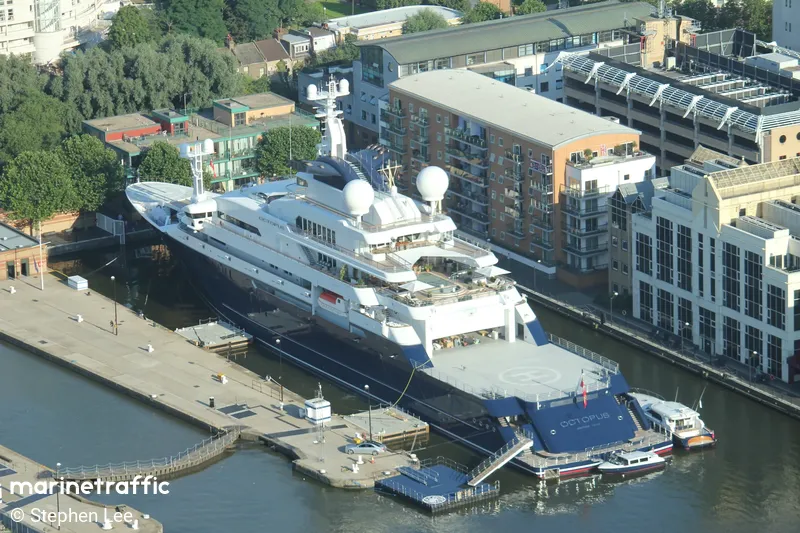
Allen's 414-foot (126 m) yacht, Octopus, was launched in 2003. As of 2025, it was 26th on the list of motor yachts by length. The yacht is equipped with two helicopters, a submarine, an ROV, a swimming pool, a music studio and a basketball court. Octopus is a member of AMVER, a voluntary group ship reporting system used worldwide by authorities to arrange assistance for those in distress at sea. The ship is also known for its annual celebrity-studded parties which Allen hosted at the Cannes film festival, where Allen and his band played for guests. These performances included musicians such as Usher and Dave Stewart. Octopus was also used in the search for a missing American pilot and two officers whose plane disappeared off Palau, and the study of a rare fish called a coelacanth, among many others. Following Allen's death in 2018, Octopus was refitted and put on the market for $325 million. Allen also owned Tatoosh, one of the world's 100 largest yachts. In January 2016, Tatoosh severely damaged about 1,300 square meters of coral reef in the West Bay replenishment zone of the Cayman Islands. In April 2016, the Department of Environment and Allen's Vulcan Inc. completed a restoration plan to help speed recovery and protect the future of coral in the area.
While Allen expressed interest in romantic love and one day having a family, he never married and had no children. His marriage plans with his first girlfriend were cancelled as he felt he "was not ready to marry at 23". He was sometimes considered reclusive. In the 1990s, he purchased Rock Hudson's Los Angeles estate from film director John Landis and added the Neptune Valley recording studio to the property. Allen's family put the home on the market for $56 million after his death.
Allen was diagnosed with Stage 1-A Hodgkin's lymphoma in 1982. His cancer was successfully treated by several months of radiation therapy. Allen was diagnosed with non-Hodgkin lymphoma in 2009. Likewise, the cancer was successfully treated until it returned in 2018. It ultimately caused his death by septic shock on October 15, 2018. He was 65 years old. Allen's sister, Jody Allen, was named executor and trustee of his estate. Several Seattle-area landmarks, including the Space Needle, Columbia Center and Lumen Field, as well as various Microsoft offices throughout the United States, were illuminated in blue on November 3, 2018, as a tribute to Allen. He was also honored by his early business partner and lifelong friend Bill Gates, who said in a statement:
Paul loved life and those around him, and we all cherished him in return. He deserved much more time, but his contributions to the world of technology and philanthropy will live on for generations to come. We will miss him tremendously.
Biographical detail compiled from Wikipedia and Wikidata, which are edited openly and may be incomplete or out of date. Fleet data is our own. Source →